


Can Aijunware Stainless Steel Thermos Bottle Factory Coatings Stop Condensation
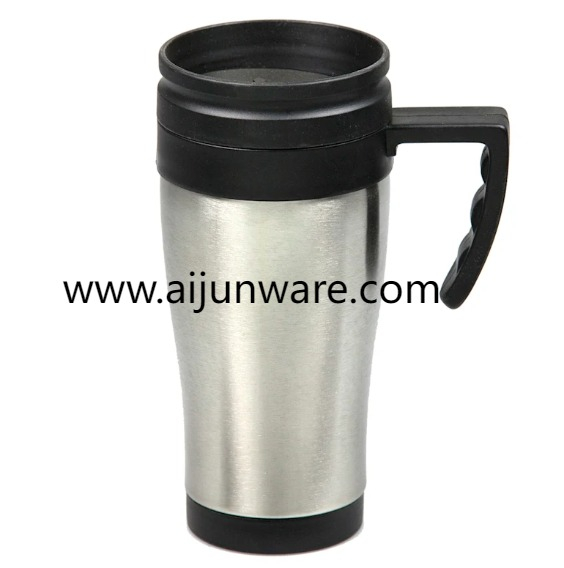
When factories refine how a product looks and performs a focus on surface treatments often follows. A Stainless Steel Thermos Bottle Factory will tell you that preventing external condensation is about more than insulation alone. Coatings can change how moisture behaves on a metal shell so a bottle stays dry to the touch even when the drink inside is very cold. That practical finish keeps bags and cup holders tidy and makes bottles more pleasant for daily carry.
One family of solutions uses hydrophobic chemistry to repel water from the outer surface. These treatments lower surface energy so moisture beads and rolls off instead of forming a continuous wet film. Industrial suppliers offer variants that range from light silane films to ceramic like layers that bond to stainless and resist wear. Applied well these finishes improve cleanability and reduce the clingy wet feel that users often complain about.
Another approach is anti condensation coatings that work by presenting a microporous texture able to absorb or disrupt early droplets before they grow into a visible film. These coatings are designed for metal roofs and industrial tanks but the same principle can be tuned for consumer products where controlling tiny moisture pockets matters. The coating acts like a network of micro reservoirs that moderate surface wetting and limit dripping under humid conditions.
Thermal insulating paints and composite coatings take a different route. Instead of only changing how water behaves on the skin they add a thin thermal barrier that keeps the outer surface closer to ambient temperature. That gap between internal liquid temperature and the outer metal makes it harder for the dew point to be reached and for condensation to form. For larger metal structures these solutions are used to reduce sweating and moisture damage and similar formulations inform consumer oriented finishes.
There are also superhydrophobic and textured surface options that force moisture into dropwise behavior. In some engineered contexts dropwise condensation even improves heat transfer but for a bottle shell the desirable effect is minimal wet area and quick runoff. These treatments can be durable but they require careful process control and testing so the finish does not wear off under daily knocks and cleaning. Manufacturers choose chemistries that balance repellency with abrasion resistance to preserve appearance through real world use.
Maintenance and real world habits matter as much as coating choice. Regular cleaning removes oils and residues that can defeat a repellent finish and harsh abrasives can abrade thin films. A user friendly bottle design will include a robust finish and clear care instructions so buyers know how to keep performance stable. Public attention on reuse and refill programs also pushes brands to make bottles that stay tidy in bags so people are more likely to carry them instead of single use containers. For daily hygiene and safe reuse follow recommended rinsing and periodic deeper cleaning to prevent buildup that can interfere with coatings.
If you are considering a bottle that resists sweating check for coated finishes that mention hydrophobic properties thermal barriers or anti condensation performance and ask about durability under cleaning. A well chosen surface treatment paired with reliable vacuum insulation and good lid seals delivers a dry outer shell and pleasant everyday handling. For a selection of coated and finished bottles and production details consult the range at https://www.aijunware.com/ .

 Turkish
 French
 Spanish
 Portuguese
 Deutsch
 Arabic
 Dutch
Dutch
 Italiano
 Russian
 Romaian
 Portuguese (Brazil)
 Greek
Greek